Volvo XC90 review
The current generation of Volvo XC90 has never had so much competition. From Range Rover to Chery – they’re coming at it from left and right. Is the XC90 still the king of the roads, or do other large SUVs top it where it matters most? Read our in-depth Volvo XC90 review to find out.


Pros
- Family-friendly seating layout
- Massive boot
- Comfortable cabin
Cons
- Harsh ride on larger 22-inch wheels
- No wireless Apple CarPlay/Android Auto
- Petrol engines can be pricey to run
Interior
Our rating: 9/10
Driving position
In terms of the seating position itself, Volvo has excelled by paying a huge amount of attention not just to comfort but safety, too.
But on the SUV front, it might not feel as big as you’d expect.
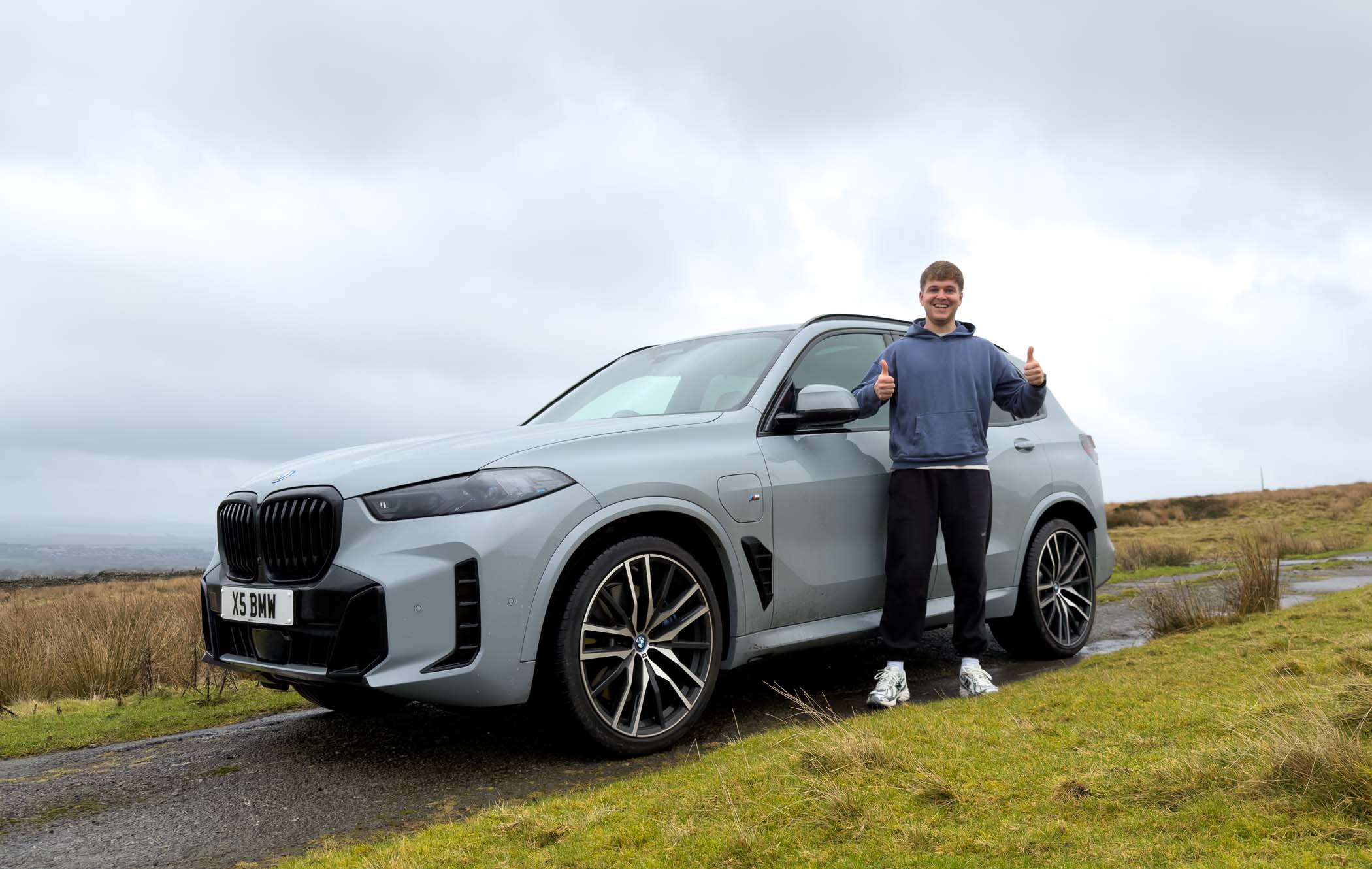
Compared with the similarly sized BMW X5, it doesn’t quite feel as high or wide, and you’ll still find that Range Rover drivers look down on you in traffic.
This is probably a good thing, because you feel like you’re inside the XC90 rather than on top of it, so it’s very ‘normal’.
We tested the top-spec Ultra Pro model with plenty of electric adjustments, including an electrically extendable thigh support.
If you really want to dial your seating position in, the X5 has a lot more moving parts, but we think the XC90 strikes a good balance without getting too complicated.
In-keeping with Volvo’s safety theme, outward visibility is probably best-in-class.
Slim A-pillars make it easy to pull out at junctions and roundabouts, and even the view through the rear window is better than most cars of this size.
Tech and features
Volvo XC90 trims
– Core
– Plus
– Plus Pro
– Ultra
– Ultra Pro
For the most part, the interior of any Volvo XC90 feels pretty similar. They all get a large 11.2-inch portrait touchscreen in the centre, which runs Google software.
Volvo’s proud of its processing power, and we never found it to be laggy. Because it’s Google-based, you can also download and install third-party apps for things like public charging (if you go for the hybrid model).
You get Apple CarPlay/Android Auto on all models, but it’s wired all the way up to top-spec.
The lack of wireless smartphone mirroring is a huge let down in such a premium car, especially when the slightly different system used in the EX90 and even the smaller EX60 connects wirelessly.
It almost renders the wireless charging part useless, because you’ll need to plug your phone in anyway.
Along the bottom are context-based shortcuts – the parking camera icon shows up at lower speeds, for example.
It has few physical buttons on the dashboard, with just features like a volume knob and glovebox release (because pulling a handle on the glovebox itself is too common, apparently).
Temperature controls are screen-based only, but adjusting cabin temperature, heated and cooled seats, and the heated steering wheel is all one easy touch away. Though, some physical buttons would be nice.
As a guide, all models get four-zone climate control, a 12.3-inch digital instrument cluster, wireless phone charging, front and rear parking sensors, a reversing camera, keyless entry, a powered boot lid and heated front seats.
Mid-spec Plus is a good upgrade if you want a 360-degree parking camera; Plus Pro adds a Harman Kardon sound system; Ultra includes a panoramic sunroof and a head-up display; and Ultra Pro adds front seat massaging and a Bowers & Wilkins sound system.
‘Bright’ and ‘Dark’ models interchange chrome and black exterior detailing, depending on whether you prefer a flashy look or stealth mode.
Performance
Our rating: 8/10
Engines and power
Volvo XC90 performance stats
– Power: 250hp, 300hp or 406hp
– 0-62mph: 5.4 to 7.7 seconds
– Top speed: 112mph (limited)
– Driven wheels: All-wheel drive (AWD)
Diesel power is gone from the entire Volvo family, and we think it’s a shame for the XC90, because its superior fuel economy and trailer-pulling power still have use cases for some drivers.
Instead, it now comes as either a mild hybrid (MHEV) or plug-in hybrid (PHEV), which is no bad thing.
Both MHEV offerings come with the same 2.0-litre engine, producing either 250hp (0-62mph in 7.7 seconds) or 300hp (6.7 seconds).
Badged B5 and B6, they’re both quick, but fuel economy takes a serious hit (more on that below).
Then, there’s the top-spec T8 plug-in hybrid, and it's the one we tested. Power comes from a combination of a 2.0-litre petrol engine (250hp) and an electric motor (156hp) for a total output of 406hp.
For outright performance, it's the quickest (0-62mph in 5.4 seconds), but it doesn’t feel ‘pin-you-into-the-back-of-your-seat' fast like the electric EX90 does.
They all drive pretty similarly, with an effortless eight-speed automatic gearbox and a selection of drive modes.
Handling and ride comfort
The Volvo XC90 has long been revered for its ride comfort. In fact, we’ve been very impressed over the years when we’ve driven different models and iterations.
However, this is very dependent on the spec you go for. Our Ultra Pro test car has the largest wheels you can option – 22 inches. They may look the coolest, but the resulting ride quality is awfully firm and quite juddery on British roads.
Instead, we’d much rather have the smallest 20-inch wheels, which provide a bit more cushioning from the thicker tyres.
But having said that, the suspension itself is superb. Our model had the upgraded air suspension, which felt supremely comfortable over poorer surfaces.
It’s clear the XC90 aims to prioritise comfort over sportiness (even on thinner rubber), but actually, it handles really well when you push it, too.
Accelerate sharply and the bonnet rises as the rest of the car seems to catch up, but throw it into a corner and it’s not as planted as a BMW X5.
In short, the XC90 sits right in the middle – right where you want it to for mixed driving.
Practicality
Our rating: 10/10
Boot space
Volvo XC90 boot space:
– Boot space: 967 to 1,007 litres
– Incl. seven seats up: 316 to 356 litres
– Incl. rear seats folded: 1,816 to 1,856 litres
Boot space varies depending on whether you’ve got a plug-in hybrid or not and how many seats you have up at any given point.
Without getting too nerdy (because there are only a few litres in it), we’ll keep it simple. If you have five seats up, there’s up to 1,007 litres of space. Seven seats up and it drops to up to 356 litres.
Fold all the seats down bar the two at the front, and you have up to 1,856 litres of space.
Our test for this car involved carrying a full weekend’s worth of SCUBA diving kit – not the standard test, we know, but we’ve done it in tens of other cars, so we know what makes a good boot.
The XC90 is probably the best we’ve ever tried, not because of its volume in litres, but because of the amount of useable floor space. There’s a lot of it.
That said, we couldn’t find anywhere that makes sense to store the removable, retractable parcel shelf if you’ve got all seven seats up. You’re better off leaving it at home.
Rear seats
Middle-row passengers are well-catered for, with seats that are just as comfy as the front row.
Shoulder room is good, headroom is excellent, but legroom is where the XC90 falls short. A big hump in the floor means there’s nowhere for the middle seat occupant to put their feet.
As for the outer two passengers, well, they’ll be absolutely fine.
The middle seat is a great pick for young children, though, because it has an integrated booster seat that you can easily lift up without having to install one.
It’s a really smart, family-friendly solution.
Because these seats slide, you can afford to give the third-row passengers a bit of space too.
Third-row headroom is acceptable, but not really ideal for adults, but compared with other seven-seaters, it’s really not a bad effort.
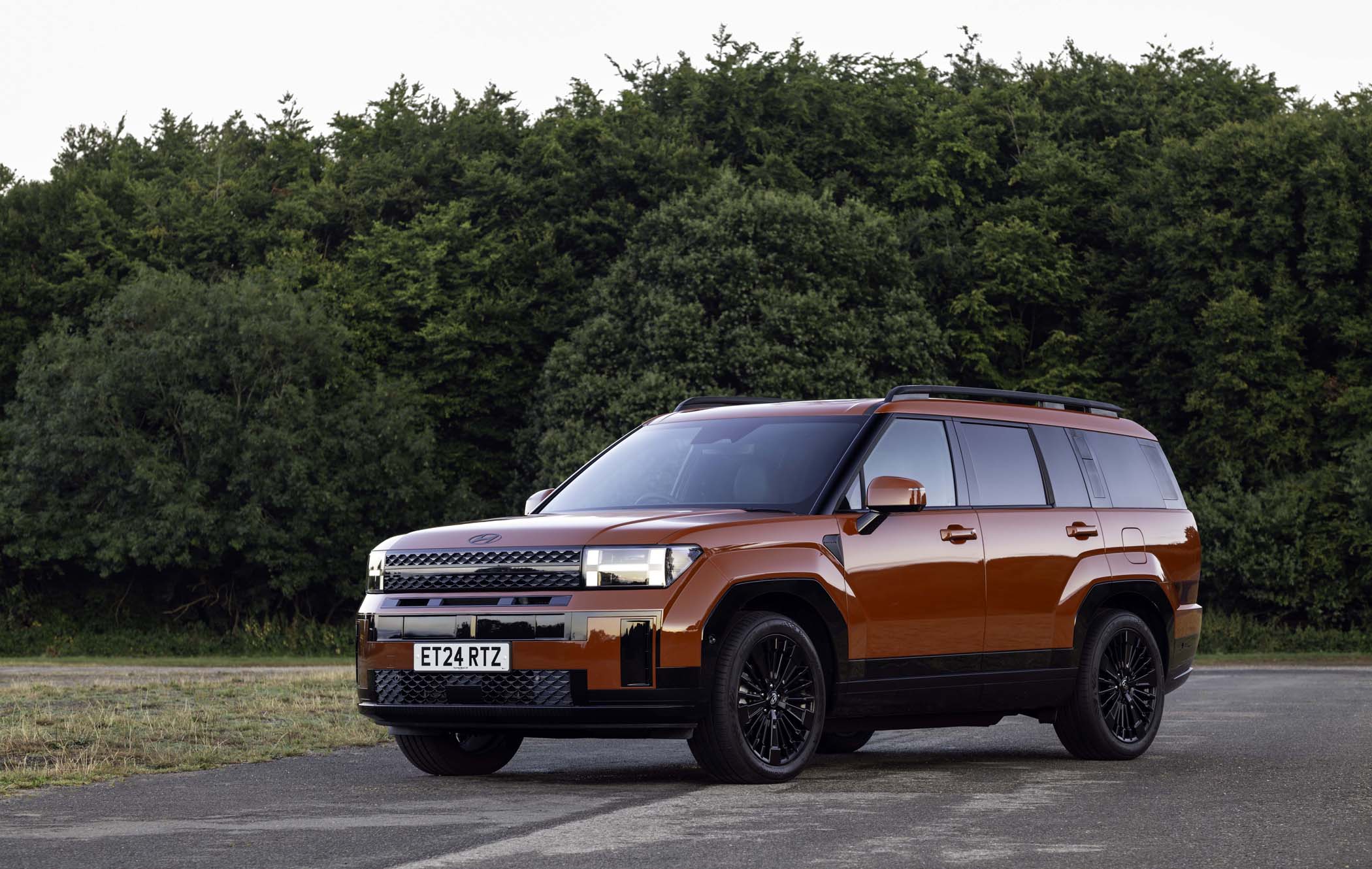
The Hyundai Santa Fe is slightly more accommodating, but the XC90 is infinitely better than something like the Nissan X-Trail which has no legroom at all with the centre row slid all the way back.
Storage solutions
Compared with pre-facelift models sold from 2015 to 2024, the cabin has been slightly reworked to create more space, and the wireless phone charger has also been moved to underneath the screen for a more ergonomic look.
Volvo says the seven-seat model has 31 litres of in-car storage, which includes a decent-sized space under the armrest and a pretty big glovebox.
The front cupholders can be covered by a stylish sliding cover to maintain the premium, minimalist vibe, and two further cupholders are situated in the rear armrest.
There’s also a lot more space in the front door bins than it looks like upon first glance – the rear bins are smaller, but still very usable.
Third-row passengers are also catered for, with their own cupholders and storage boxes built into the sides of the car.
Volvo XC90 dimensions
– Height: 1,771mm
– Width: 2,140mm (incl. door mirrors)
– Length: 4,953mm
– Kerb weight: Up to 2,227kg
Safety
Volvo has long been known for its safety, and the XC90 gets all the modern active systems you’d expect, without them ever feeling too intrusive. A rarity in this day and age.
Though the refreshed XC90 hasn’t been crash-tested by Euro NCAP, there isn’t a single modern Volvo that hasn’t received five stars.
Running costs
Our rating: 7/10
Fuel economy
– PHEV range: 43 miles
– Battery size: 18.8kWh
– MPG: Around 40mpg
Volvo claims a little more than 30mpg for the mild hybrid petrol models, and in reality, low 30s is what you can expect.
On paper, the XC90 T8 PHEV does 235mpg, but don’t be fooled.
It has an 18.8kWh battery, of which 14.7kWh is usable, so it doesn’t get a massive electric range. Volvo says 43 miles, but we were getting around 33 miles in reality.
That’s far less than key rivals like the Audi Q7 (50 miles), BMW X5 (64 miles), Mercedes GLC (74-78 miles) and Range Rover Sport (74 miles), so the XC90 feels a bit dated in this respect.
That shorter range doesn’t lend it well to motorway fuel economy – we were getting mid-30s MPG across two separate 250-mile trips.
Our long-term average over 650 miles, including more local (electric) driving, brought the average up to just over 40mpg.
Reliability
The XC90 sits between current and previous models, and future electric models, so it takes the parts Volvo knows from both generations and uses them to good effect.
We already know Volvo stands out for longevity, but the three-year warranty is either matched or beaten by all other manufacturers.
The verdict
Interior
9/10
Performance
8/10
Practicality
10/10
Running costs
7/10
On the surface, the facelifted XC90 looks like not much has changed, but beneath it all, Volvo has doubled down on what it does best: comfort, safety, and understated luxury. After all, if it ain’t broke, why fix it?
We think the XC90 really comes into its own as a family car, where you can carry up to seven in relative comfort or fold the seats down for one of the best SUV boots.
The updated infotainment system is good to use, and Google underpinnings put it on the smarter side of in-car systems, but the lack of wireless smartphone projection in this day and age is an unforgivable offence.
The T8 plug-in hybrid is the pick of the range, but it lags behind rivals in terms of outright electric range.
In short, the Volvo XC90 no longer feels like the newest luxury SUV, but what it does feel is the most well-rounded and understated in a world obsessed with flashy tech and expensive gadgets.
Our pick: Volvo XC90 T8 PHEV Ultra Pro (for maximum electric range and tech – but maybe swap on some smaller wheels with more tyre for added comfort)
– Written by Ben Welham and Craig Hale
Similar to the review