Set up a search alert with your chosen filters to get notified when new inventory arrives.
Mercedes-Benz
GLS
Price reductions on selected cars, from £250 - £1000 off
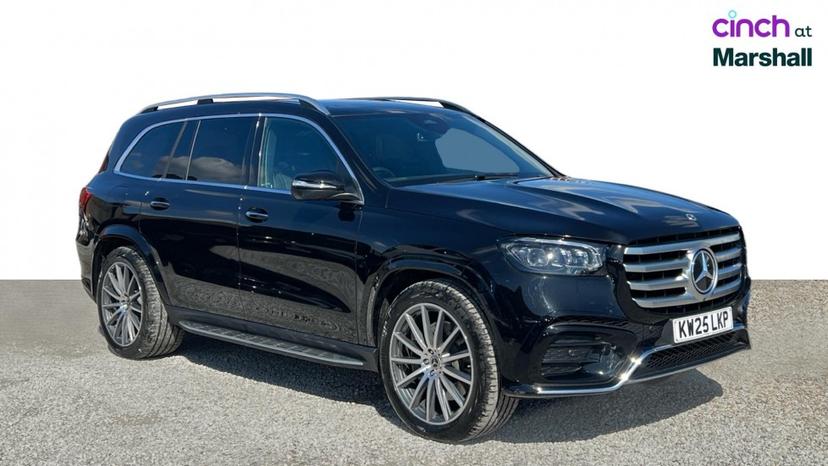
Plush, high-tech and enormous, Mercedes's top-level SUV is more 'living room on wheels' than automotive product. The GLS is the largest SUV the brand makes, with seven seats and a massive 470-litre boot even with all the seats in use. It's a monster, yet it still rides and steers like a true Mercedes.
Based on a cash price of £12,500, with a £2,000 customer deposit, borrowing £10,500 at a representative APR of 12.4%. 48 monthly payments of £189.23. Fixed rate of interest per annum 6.45%. Optional final payment £5,289.00. Option-to-purchase fee £10. Amount of interest £3,872.02. Total amount payable £16,372.04. Annual mileage limit 8,000 miles. Excess mileage charge 4p per mile.
£400 off
GLS 450d 4Matic AMG Line Premium + 5dr 9G-Tronic
Mercedes-Benz
GLS
Use our Help Me Choose tool to go from 1000s of cars to just a handful of recommendations — and cinch your search.
A Mercedes GLS is the flagship SUV in the range, sitting above the already very high-end GLE as a bigger and more kitted-out car. Originally known as the GL, it adopted the new GLS name in 2015.
Used models include punchy six-cylinder diesel models as well as powerful petrol versions, including the high-performance Mercedes-AMG GLS 63.
Popular Mercedes GLS trims
Unlike some of Mercedes’ smaller cars, the GLS is only available in higher trim levels to ensure you always get the maximum amount of equipment and luxury. Exact kit varies by generation and model year.
> Mercedes GLS AMG Line Premium – second-generation base model with adaptive high beams, air suspension, heating for the front seats and steering wheel, triple-screen setup and a Burmester sound system
> Mercedes GLS AMG Line Premium Plus – this one adds soft-close doors, cooled front seats with massage function, heated rear sets and even heating for the front and rear armrests
> Mercedes GLS Exclusive Premium Plus – a smarter exterior with a bold, de-badged grille and a less sporty look
Mercedes GLS history
The GLS follows a long line of large and luxurious seven-seaters, but it’s gone upmarket as time’s gone on.
> First-generation Mercedes GL (2006) – the original seven-seat SUV was more about practicality than luxury, though it wasn’t short of bells and whistles
> Second-generation Mercedes GL (2012) – it had a new and updated look with the latest (at the time) Mercedes tech inside
> Mercedes GL(S) facelift (2015) – it adopted the ‘GLS’ name in 2015, but it was technically still the same generation as the 2012 model with a few tweaks
> Second-generation Mercedes GLS (2019) – the second GLS, or the third in its family, came in 2019, so brought with it a tech-first interior focused on the MBUX infotainment system
> Mercedes GLS facelift (2023) – it got a new look with a new front end, but more importantly, a more advanced infotainment system
> Third-generation Mercedes GLS (2026) – the third GLS and the fourth GL/GLS is the most luxurious to date, with the brand's new Superscreen and a truly S-Class luxury feel
If there’s a feature that you can get on a car, it’ll be included with the GLS. It’s the sort of high-end car that debuts what you can expect on your family car in a few years’ time.
For example, the 2026-onward model has an impressive Superscreen setup which includes no fewer than three 12.3-inch displays stitched together in front of the driver and passenger.
It’s also designed to make driving feel effortless, so besides the steering aids and adaptive cruise control you get on most modern cars, it also has air suspension for a soft ride and four-wheel drive to put the power down as efficiently as possible.
While the GLS uses engines and technology found across the broader Mercedes range, it’s still a complicated SUV and maintenance can be higher than usual. For example, the large tyres cost more than they would to replace on a Mercedes A-Class.
As for long-term dependability, we’ve no issues recommending any Mercedes on the basis that the models that came before have built a reputation of reliability.
The GLS isn’t built with rock-bottom running costs in mind. Its size, weight and powerful engines mean fuel, insurance, servicing and other costs can be higher than average.
Still, the newer GLS 450 d model with the 3.0-litre diesel engine claims an impressive 35mpg. The small mild hybrid system aids efficiency at slow speeds.
Most GLS drivers want this type of car because it’s large and luxurious, so it’s perfect for business commuters who travel long distances. Used Mercedes GLS cars for sale are also a good idea for large families, with seven seats that are all usable by adults to some degree.
Other large SUVs and/or seven-seaters include the BMW X7, Audi Q7, Range Rover and Land Rover Discovery.
Yes, most Mercedes GLS models have seven seats across three rows. The third row is more spacious than in many seven-seat SUVs, making the GLS particularly useful for larger families.
The Mercedes GLS can be a dependable luxury SUV, but its complex electronics, air suspension and extensive equipment can make faults expensive to repair. Look after your used Mercedes GLS with regular maintenance, as with any car.
Fuel economy varies significantly by engine. Newer GLS 450 d diesel models can officially return around 35mpg combined, while powerful petrol and Mercedes-AMG versions will use considerably more fuel.
Current seven-seat GLS models offer around 355 litres of boot space with all seven seats being used. Fold both rear rows down and you end up with 2,420 litres of space.
Many Mercedes GLS models can tow a braked trailer weighing up to 3,500kg, making them suitable for large caravans and trailers. Exact towing limits vary by version, so check the specifications of the individual car.