JAECOO E5 review
The cost of everything just keeps rising, doesn’t it? And even if you want to cut your running costs, it usually means buying an expensive electric car. Step in the JAECOO E5, which is cheap to buy AND cheap to run. But while the value proposition is obvious, does it feel like it’s rough around the edges or is this electric crossover enough to tempt you away from more established competition? Read our JAECOO E5 review for all the details.

)
Pros
- Large battery doesn’t impact boot/cabin space
- Genuinely efficient electric motor
- Strong value for money
Cons
- Front-wheel-drive setup can struggle with the power
- Tyre noise is noticeable on the motorway
Interior
Our rating: 7/10
Driving position
Sitting behind the wheel of the JAECOO E5 is no different to the petrol-powered J5 (which we've reviewed separately, and this is a bigger deal than it sounds.
See, with the large battery sitting beneath the floor, electric cars usually struggle to offer enough adjustability in the seating, with the front seats generally not going low enough.
Thankfully, you’ve got the same adjustments in this electric E5, which is really good news.
This challenge is especially pronounced in cars like the Leapmotor B10, and even the Volvo EX30 feels slightly off (while the seat goes low enough, the floor feels higher).
As well as a solid seating position, all-round visibility is excellent thanks to slim pillars all-round and extra panes of glass at the back to tackle potential blind spots.
Tech and features
JAECOO E5 trims
– Pure
– Luxury
What you get with the JAECOO E5 is broadly in line with the petrol-powered J5, which means all-round parking sensors and keyless entry.
Some features specific to the electric model that you don’t get elsewhere are heated washer nozzles, automatic two-zone climate control, a vehicle-to-load (V2L) socket in the boot and sat-nav.
Strangely, sat-nav isn’t available at all in the petrol and hybrid versions, but it’s standard across both electric trims.
Up front, you’ve got an 8.8-inch display behind the wheel for your driving data. You can swap out certain bits of information, and for the most part, it does a good job.
The 13.2-inch portrait touchscreen in the centre is also a fixed size (unlike the bigger J7, which gets a size bump for the top-spec model).
The operating system itself is fine – everything’s nice and responsive and there’s plenty of customisation for the car’s features, but it’s not the more comprehensive software nor does it make the best use of all the available space.
Wireless Apple CarPlay and Android Auto are very much welcome, but they block out the entire screen so exiting smartphone mirroring to control basic functionalities, like climate control, is far too complex.
Top-spec additions fitted to the Luxury trim, which we tested, include a full-length panoramic sunroof with an electric shade, a powered boot lid, electric front seats, heating and cooling for the front seats, a cooled wireless phone charger and an upgraded SONY sound system.
Performance
Our rating: 6/10
Electric motors and power
JAECOO E5 performance stats
– Power: 207hp
– 0-62mph: 7.7 seconds
– Top speed: Up to 108mph
– Driven wheels: Front-wheel drive (FWD)
You’ve got plenty of performance from the JAECOO E5, so don’t worry about this crossover feeling slow.
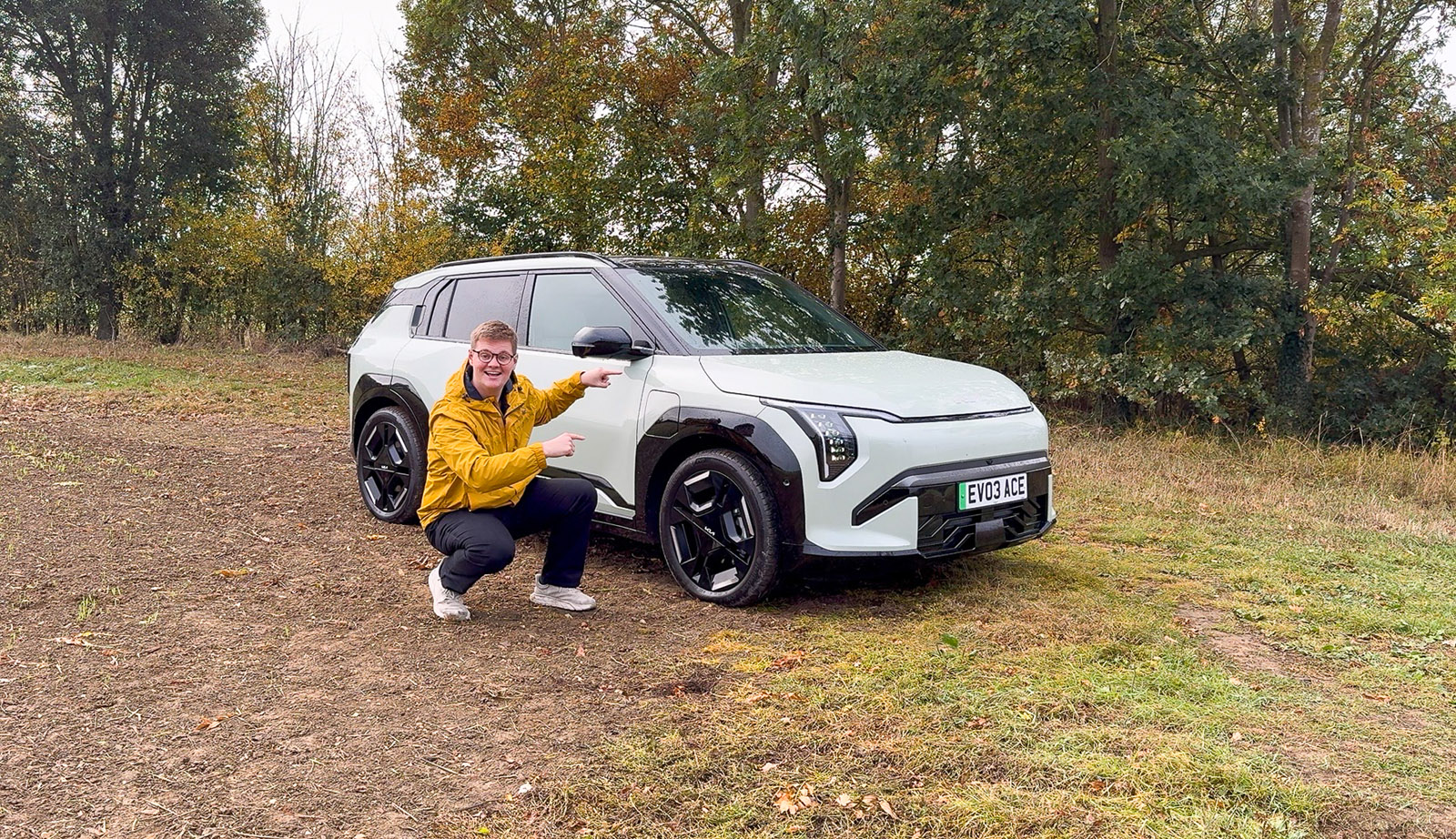
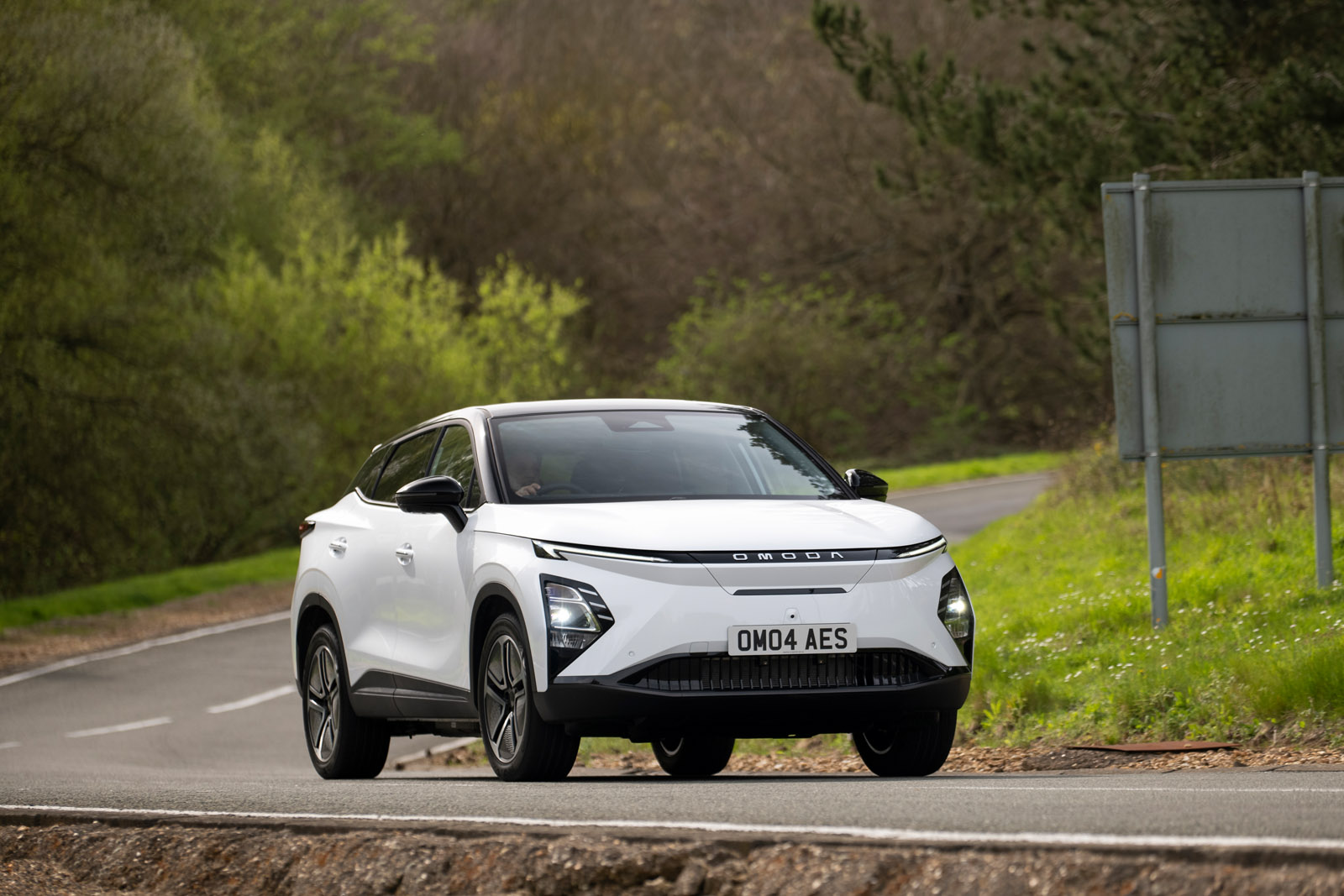
With 207hp on tap, it’s about the same as you get in the middling specs of other cars, like the VW ID.3 (204hp), OMODA E5 (211hp) and Kia EV3 (204hp).
It’s also broadly in-line performance-wise, with a 0-62mph time of 7.7 seconds, but because of how instantaneous the torque delivery is, it feels quicker still.
Compared with some other affordable electric crossovers, like the Jeep Avenger Electric, Peugeot E-2008 and Vauxhall Mokka Electric, it feels as quick as you’d like.
While the dual-clutch gearbox in the petrol model holds back the driving experience, the much simpler electric setup makes for a far smoother and more comfortable ride.
It’s worth noting that, because power goes to the front wheels, you get a lot of wheelspin with full throttle, including off the line at roundabouts and even at town speeds when you’re looking to make a quick overtake.
It’s a pretty common problem among electric vehicles (even the 136hp Renault ZOE had this issue years ago), and it’s why many choose to go for rear-wheel-drive setups.
Torque steer is also pretty noticeable under heavy acceleration, where it feels like the E5 is pulling to one side. It’s a characteristic of powerful front-wheel-drive cars and not a JAECOO fault, but it would’ve been nice if JAECOO could have tweaked power delivery to minimise or eliminate this sensation.
Handling and ride comfort
The JAECOO E5 makes a lot of sense around town, where its light steering is perfect for making tight manoeuvres.
Its suspension probably leans slightly to the firmer side, keeping the car rigid in corners, which can mean it feels harsh around town. Speed bumps are generally ok, but potholes and poor surfaces are more comfortable in a VW ID.3.
That being said, we found the petrol-powered JAECOO 5 to be more crashy around town – maybe the extra weight of the battery pack helps pad things out and soften the ride a bit.
Just as with that car, tyre noise becomes pretty loud at high speeds.
Practicality
Our rating: 8/10
Boot space
JAECOO 5/E5 boot space:
– Boot space: Up to 480 litres
– Incl. Rear seats folded: Up to 1,180 litres
We’re really fond of the JAECOO 5 series, because the car is built to support all powertrains. This means the electric E5 has the same amount of space in the boot as petrol and hybrid versions.
The 480-litre boot is really good news. It's far more than you get in most rivals, including the Volvo EX30 (318 litres), VW ID.3 (385 litres) and OMODA E5 (380 litres). Even the impressive Kia EV3 (460 litres) falls slightly short.
You can, of course, fold the rear seats down for more space. They lie nearly completely flat for maximum practicality.
JAECOO doesn't actively promote the front boot (‘froot’), but there is a small storage space under the bonnet to keep things like charging cables.
It’s nowhere near as the Tesla Model Y’s, but it’s much more usable than the poorly formed 'froot' found in a Volvo EX30.
Rear seats
That big boot doesn’t impact rear-seat space, with enough room for two adults with ease. Of course, that middle seat is much more of a perch, but that’s typical of nearly any car.
Top-spec Luxury models with the panoramic sunroof are really appealing for passengers, because it floods the cabin with light. It really makes the interior feel light and airy.
Storage solutions
The JAECOO E5 has storage in all the right places – a spacious glove box, lots of room under the armrest, twin cupholders in the centre console and a tray for two phones up front.
JAECOO 5/E5 dimensions
– Height: 1,650mm
– Width: 1,860mm (excl. door mirrors)
– Length: 4,380mm
– Kerb weight: Up to 1,535kg
Safety
JAECOO says the ‘5’ and ‘E5’ have 19 ADAS safety functions built-in, and thankfully they’re not limited to specific trims, so you don’t need to upgrade for maximum safety, which is sometimes the case with other cars.
The infotainment system’s menus for all the driver assistance features are actually pretty clear to use, but they’re tucked away behind a few presses of the screen which is a pain if you want to configure some systems to be off at the start of every drive.
While the JAECOO E5 hasn’t been tested by Euro NCAP yet, the bigger ‘7’ and some other Chery and OMODA cars (which are mechanically similar) all have five-star ratings, so the ‘5’ and ‘E5’ should probably perform similarly.
Running costs
Our rating: 8/10
Range and charging
JAECOO E5 electric range, battery and charging
– Range: 248 miles
– Battery size: 61.1kWh
– Max charging speed: Up to 80kW
– Charge port location: Front right
– Charge time (AC): Around 8.5 hours with a 7kW charger
– Charge time (DC): 30-80% in 27 minutes
– Efficiency: 3.7 mpkWh (claimed)
Per strict testing, the E5 will do 248 miles between charges from its 61.1kWh battery. That’s based off efficiency figures of 3.7 miles per kWh – the electric equivalent of MPG in petrol and diesel cars.
In our testing, we were able to easily exceed this without trying. Shorter town journeys where EVs are typically at their most economical were returning comfortable over 4mi/kWh.
We got 3mi/kWh on a motorway trip, which is broadly in line with other EVs, which means if you’re travelling long distances at high speeds, don't expect to get that full 248 miles.
This is broadly in line with other electric crossovers, including newcomers like the Geely EX5 and Leapmotor B10, but there are alternatives that offer stronger real-world efficiency like the Kia EV3.
11kW AC charging is standard, which is ideal for public chargers, but homes are nearly always limited to 7kW, which means a full charge in under nine hours.
80kW rapid charging is slightly disappointing, with a 30-80% top-up complete in 27 minutes. Most cars in this part of the market will manage at least 100kW if not 150kW or beyond.
It just means you’ll be waiting a few extra minutes at the services when you’re on a longer trip. Still, we’re talking minutes, not hours, so go and enjoy that coffee.
Reliability
JAECOO is still a new brand to the UK, but it’s built under the leadership of Chinese giant Chery, which has been shipping cars internationally for well over two decades.
Its electric powertrains are much newer (this is actually the first electric model from JAECOO, OMODA and Chery combined to arrive in the UK), but the mechanical simplicity means there’s far less to go wrong in the first place.
As well as a seven-year/100,000-mile vehicle warranty, you get eight years’ cover on the high-voltage battery.
The verdict
Interior
7/10
Performance
6/10
Practicality
8/10
Running costs
8/10
While its petrol-powered sibling, the JAECOO 5, feels slightly unpolished at times, the all-electric JAECOO E5 is a far easier proposition to recommend.
That’s mostly due to the refinement of the powertrain. Sure, it wheelspins and you get a bit of torque steer if you’re too eager on the throttle, but as far as front-wheel-drive electric SUVs go, it’s a good effort.
What stands out the most, though, is that there are no compromises for this electric model. It has all the same boot and cabin space benefits that the regular J5 has – plus extra storage under the bonnet.
Where it feels let down, maybe, is with the 80kW charging speed, making rapid charging on-the-go feel slower than it should do.
So with a range of around 250 miles and a price tag far below those of its rivals, it’s a perfect crossover for family life in the city and a great starter EV.
Similar to the review