Hyundai Tucson review
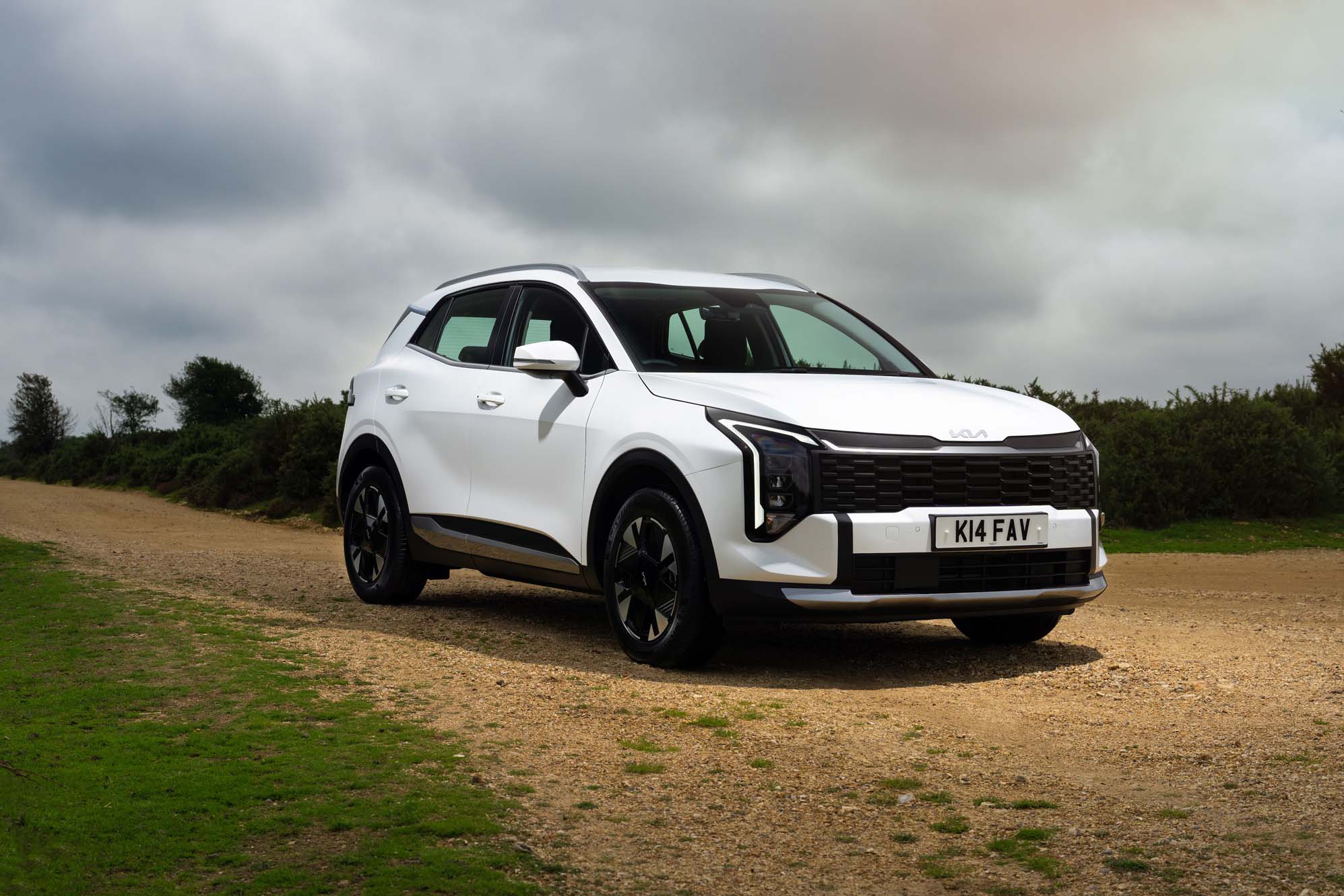
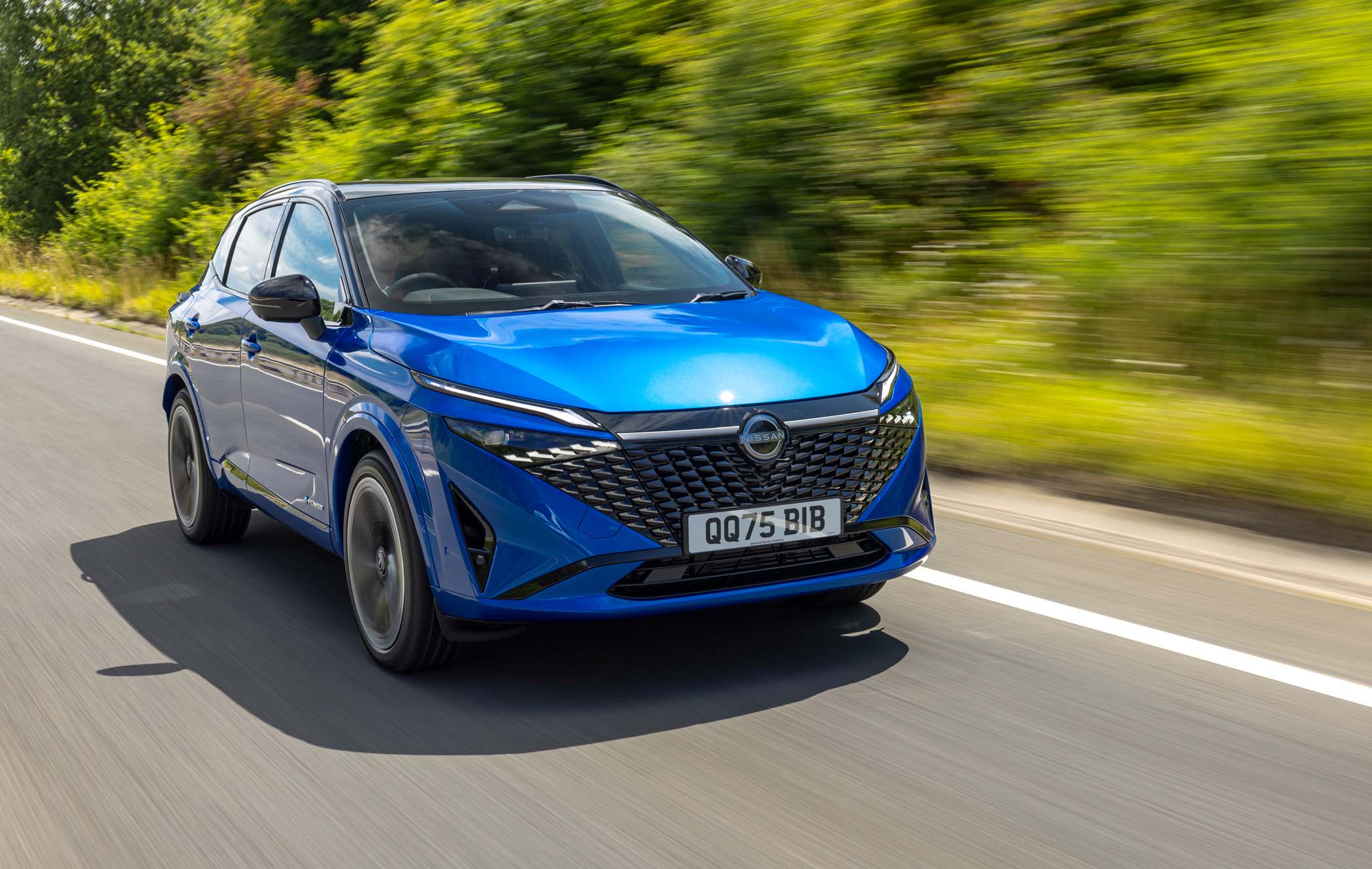
When you’re competing with the Kia Sportage and Nissan Qashqai, life suddenly becomes very difficult. Still, Hyundai is no stranger to friendly rivalry and has made sure the Tucson is better than ever. It’s spacious, economical and looks great, but does it have what it takes to pip the opposition? Read our full Hyundai Tucson review to find out.

)
Pros
- Economical
- Big, spacious boot
- Zero-fuss interior
Cons
- Kia alternative has a longer warranty
- Noisy engine under acceleration
- Not the cheapest
Interior
Our rating: 9/10
Driving position
We really can’t fault the Hyundai Tucson’s driving position.
There are loads of electronic adjustments in the seat, and even if you’re over six feet, you get tonnes of headroom to play with.
All-around visibility is really good, and surprisingly so for an SUV of this size.
Usually, your view out the rear window is less-than-ideal, but Hyundai has made it much better than many of its rivals.
There are also slim A-pillars, so navigating junctions and roundabouts is a breeze. It might be the perfect size and shape for an SUV.
Tech and features
Hyundai Tucson trims
– Advance
– Premium
– N Line
– N Line S
– Ultimate
If you’re stepping into a Tucson from something like a Tesla, you’re going to think it’s all a bit primitive, with no single massive touchscreen for everything.
But in reality, this setup is by far the most user-friendly and all you really need in a car.
There are two 12.3-inch screens spanning the dashboard – one is the driver’s display and the other is for all things infotainment and media-related.
The system itself is really easy to use and very self-explanatory, but we found ourselves just using wireless Apple CarPlay most of the time anyway. There’s also DAB radio, Android Auto and Bluetooth connectivity, so there’s plenty to go around.
We can do this because below the screen, there’s a separate panel for all things climate controls (as well as physical dials), so there’s no need to take your eyes off the road while on the go.
On this panel, you can also control your heated/ventilated seats and heated steering wheel (in the top-spec Ultimate trim). It’s all very intuitive and one of the best modern systems we’ve seen.
More tech we love is the front and rear parking sensors and rear-view camera you get as standard. Top-spec N Line S and Ultimate trims get a 360-degree camera and a system called Blind Spot View Monitor (BVM), which would be our preference and makes parking/reversing out of spaces much easier.
Performance
Our rating: 8/10
Engines and power
Hyundai Tucson performance stats
– Power: 157hp, 209hp or 246hp
– 0-62mph: 9.9 to 6.8 seconds
– Top speed: 125mph
– Driven wheels: Front-wheel drive (FWD) or four-wheel drive (4WD)
When it comes to Tucson engines, there are four different options available – all of which are based on the same 1.6-litre petrol.
First is the standard petrol engine with a manual gearbox and 157hp. Next up is the same model, but with an automatic gearbox and mild-hybrid technology.
After that is the full hybrid (self-charging), with 209hp and the ability to drive very short distances on electric power, giving you more reliance on the battery around town. This can do the 0-62mph sprint in around seven seconds.
Then, at the top of the range is the plug-in hybrid (PHEV), with 246hp and an electric-only range of 43 miles, which is the same as the Ford Kuga and Kia Sportage.
Our test car was the self-charging hybrid, which is the best pick for most people because you don’t need to worry about plugging it in to charge. Simply put fuel in, and you’re away.
Overall, it drives really nicely. There’s plenty of poke from the engine, though we often experienced a bit of a lag between pressing the accelerator and actually going, and the engine and gearbox can be a bit sluggish at first.
There are also three stages of regenerative braking, which is decently strong for a hybrid, but nowhere near as impressive as you’d find in EVs, though still enough to replenish the tiny 1.49kWh battery in our hybrid car.
We found the car mostly in EV mode around town, and when lifting off the accelerator on the motorway, which helped the overall MPG figure.
In fact, this car takes efficient driving very seriously, which is why it only has two modes: Eco and Sport – no Normal. We doubt any Tucson user ever flicks it into Sport, but if they did, it would just make it a little more responsive.
Handling and ride comfort
Fitted to our test car were the larger 19-inch alloy wheels (over the standard 17s), which are still relatively small by today’s SUV standards.
This made the ride relatively supple and slightly better than the Kia Sportage around town or on rougher sections of the motorway.
As for handling, the Tucson is far from a sports car, and if you want something with the Hyundai badge and sharper handling, we’d suggest the i20 hatchback.
Instead, it offers a very relaxing drive, with light steering. Though we find the VW Tiguan to be a little more direct, if that’s what you’re after.
Practicality
Our rating: 9/10
Boot space
Hyundai Tucson boot space:
– Boot space: Up to 620 litres
– Incl. Rear seats folded: 1,799 litres
In its standard petrol form, the Tucson has a 620-litre boot, which puts it among the best in its class.
The hybrid model’s boot space drops to 616 litres, due to the batteries under the boot floor. Then, the plug-in hybrid has 558 litres. Oddly, the mild hybrid sits at the bottom of the range in terms of space, with 546 litres.
No matter which one you choose, you still get a wide boot opening with a flat floor, making it easy to slide in larger items.
And if you need a bit more space, fold down the rear seats to get a full 1,799 litres of space.
Rear seats
The Tucson's rear seats are as spacious as you’d expect, especially for taller passengers.
We travelled with rear passengers over six feet tall and had zero complaints the whole way, with plenty of headroom, knee and foot space.
Three adults back there may be a bit of a squeeze on longer drives, but it’s perfect for shorter trips to the pub.
Rear door bins are small, but there’s enough space for an average-sized bottle in each, plus there's a fold-down armrest in the centre with integrated cupholders.
Storage solutions
Designed for families, the Tucson has plenty of useful cubbies to store all your bits and pieces.
Below the central screen is a well-sized area for storing keys, phones, wallets, etc. Above it is a central armrest with ample storage space, as well as two cupholders in front.
The door bins aren’t very deep, but there’s enough space for smaller bottles or sunglasses.
The glovebox itself is relatively large, and there’s a shelf above it for a bit more space.
Hyundai Tucson dimensions
– Height: 1,650mm
– Width: 1,865mm
– Length: 4,510mm
– Kerbweight: Up to 1,924kg
Safety
Like every other car brand today, Hyundai takes safety incredibly seriously, which is why the Tucson scored a full five stars in the Euro NCAP safety test.
This is thanks to standard equipment such as autonomous emergency braking (AEB), a driver attention warning system, speed-limit recognition, and trailer stability assist.
There’s also a nifty system that automatically applies the brakes after a collision to prevent you from rolling and causing a second impact.
It also comes with the standard bings and bongs for lane-keep assist and speed limit warnings, which, in our testing, aren’t always that accurate.
Luckily, Hyundai has added a little hack to turn them off easily right on the steering wheel. For lane-keep assist, hold down the button with the wheel icon, and for the speed limit warning, hold down the volume control for a few seconds to turn it off.
It’s a faff doing it every time you get in the car, but if it stops the car from bugging you because it thinks the motorway is a 20mph zone, then we’ll take it.
Running costs
Our rating: 7/10
Fuel economy
The Hyundai Tucson prides itself on being a fuel-efficient family SUV, so we thought we’d put it to the test.
The naturally aspirated petrol engine is rated up to 44.8mpg, and the PHEV gets a claimed 39mpg (when the battery is dead).
Our test car, being the self-charging hybrid, is probably the best pick for most people, with a claimed 50.4mpg in its best form.
We drove our car exactly 400 miles on motorways, country lanes, and through towns, and encountered many traffic jams. Over this distance, we averaged 43mpg.
This is rather good, given the different types of driving we did, with the vast majority on the A1.
Reliability
Hyundais and Kias (both part of the same wider group) have some of the highest reliability scores of any manufacturer.
This is because they’re incredibly well-made and come with solid warranties, including Hyundai’s five-year, unlimited-mileage warranty.
This, of course, still applies to used cars within that five-year window, but even if it doesn’t, you can add cinchCover for extra peace of mind on all our used cars for sale.
The verdict
Interior
9/10
Performance
8/10
Practicality
9/10
Running costs
7/10
The Hyundai Tucson remains a titan of the family SUV segment for a very good reason: it does the basics better than almost anyone else.
By retaining physical controls for climate and essential functions alongside crisp 12.3-inch screens, Hyundai has created one of the most intuitive cabins on the market – a refreshing change in an era of touchscreen overload.
While the engine can get a little vocal, and the Kia Sportage offers a slightly longer warranty, the Tucson counters with a more supple ride and a sense of effortless usability.
Whether you're navigating the school run or a trek up the motorway, the Tucson feels perfectly sized and expertly engineered for modern family life.
It isn't just a sensible choice; it’s arguably the new gold standard for hybrid SUVs.
Similar to the review