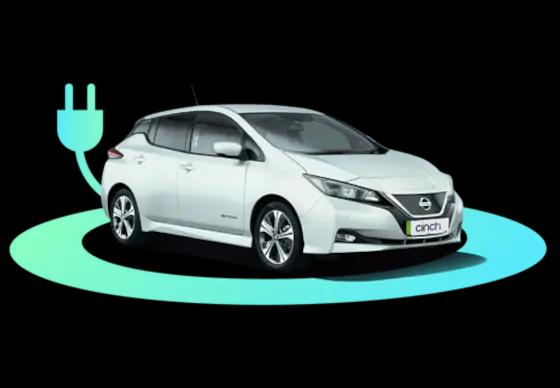
From (BYD) ATTO 3 to (Renault) ZOE, the choice of electric cars has never been better.
Now’s the time to take advantage of zero emissions, lower running costs, the latest tech, and a new, refined driving experience.
At cinch, you can get quality used EVs with a 3-month warranty and at least 6 months' MOT, as well as the latest new electric cars. Flexible finance is also available to suit all budgets, and you can get an instant online quote.
If you’re new to electric vehicles (EVs) – and all the potential crammed into those two simple letters – here’s everything you need to know:
Benefits of an electric car
Lower emissions
= eco smugness
Cheaper tax
= lower running costs
Quiet and refined
= a modern drive
Charging at home
= ultimate convenience
Futuristic tech
= cutting-edge motoring
Charging an electric car
Watch our helpful video to learn all about EV charging:
)
It's easier than you might think to charge an EV, whether you’re at home or on the road, as we explain in these handy guides:
How much does it cost to charge an electric car?
In most cases, charging an electric car is cheaper than a tank of petrol.
The cheapest way to charge is usually to do so at home overnight on a dedicated electric car energy tariff. And we've partnered with myenergi to make at-home electric charging faff-free.
Using a public charger will be much faster, but you do have to pay a bit more for that convenience. Luckily, all our used electric cars come with cinchCharge – a one-stop shop for finding and paying for EV charging on the road.
Read our guide about the costs of electric car charging to find out more about EV ownership.
Electric car range
Electric car ranges have come on leaps and bounds since the first mainstream models launched.
A number of the latest models will do over 450 miles on a single charge. The sweet spot for many EVs – especially city cars – is around 150-250 miles, which saves on the cost and weight of bigger batteries.
So, range anxiety might be a thing of the past, but it's still worth keeping an eye on your driving style if you want to go further between charges.
Just like in a petrol or diesel car, being gentle on the accelerator and not running the air-con at full blast is more efficient, saving you fuel (or, in this case, electricity).
For more top tips, read our economical electric car driving guide.
Did you know?
EV tech is older than you think – it dates back to the 1800s, and around 1/3 of cars in the US were electric at the turn of the 20th century.
Frequently asked questions about EVs
EV jargon busters
So many EV acronyms and new terms… Here's what they all mean:
EV
An electric vehicle (EV) uses a battery to store energy and electric motor(s) to drive the car.
BEV
A battery electric vehicle (BEV) is the same as an EV, and uses a combination of rechargeable batteries and electric motor(s) to power and drive the car.
HEV
A hybrid-electric vehicle (HEV) doesn't need plugging in – the battery is charged by the engine. These are sometimes called 'self-charging hybrids'.
PHEV
Plug-in hybrid-electric vehicles (PHEV) have internal combustion engines (ICE), usually petrol, and electric motor(s) powered by rechargeable batteries.
The engine needs fuel, and the batteries need to be charged, but they can often drive on electric-only power for short distances.
Kilowatt-hours (kWh)
A kilowatt-hour (kWh) for an electric car is typically a measure of the energy stored in its batteries.
Range
Range is the number of miles an electric car can travel on a full charge.
'WLTP' range is the number of miles an electric car can travel on a full charge according to the industry standard testing procedures.
Lithium-ion
Lithium-ion is the type of battery used to power an EV, as well as other cool stuff like your smartphone.
ICE
An internal combustion engine (ICE) is the traditional engine found in a petrol or diesel car.
)